
Powered by: CyberDudeBivash Brand | cyberdudebivash.com
Related: cyberbivash.blogspot.com
Zero-days, exploit breakdowns, IOCs, detection rules & mitigation playbooks.
By Bivash Kumar Nayak Founder & Cybersecurity Strategist, CyberDudeBivash Pvt. Ltd. January 11, 2026
In the rapidly evolving landscape of 2026, artificial intelligence (AI) has become both a powerful ally and a formidable adversary in cybersecurity. As organizations increasingly rely on AI for everything from automated threat detection to predictive analytics, cybercriminals are leveraging the same technology to orchestrate sophisticated attacks. According to recent reports from Gartner, AI-driven cyber incidents are projected to increase by 75% this year, with global damages exceeding $10 trillion. This surge underscores the urgent need for robust enterprise AI security solutions and regular AI security audits.
At CyberDudeBivash Pvt. Ltd., we specialize in zero-trust cybersecurity tools and intelligence that empower businesses to stay ahead. In this comprehensive guide, we'll explore the top 5 AI cybersecurity threats in 2026, their implications, and practical defense strategies. Whether you're a CISO, IT professional, or business owner, understanding these threats is crucial for implementing effective defenses. Let's dive in.

1. AI-Generated Deepfake Phishing Attacks
Deepfake technology has advanced dramatically, enabling attackers to create hyper-realistic audio, video, and text impersonations. In 2026, AI-generated deepfakes are used in phishing campaigns to mimic executives, colleagues, or trusted vendors, tricking victims into transferring funds, sharing credentials, or approving malicious actions. These attacks bypass traditional email filters by incorporating personalized details scraped from social media or leaked data.
The risk is amplified in remote work environments, where video calls are common. A recent study by Deloitte indicates that deepfake-related fraud has cost businesses over $2 billion in the past year alone. For enterprises, this threat demands a shift toward phishing-resistant MFA and advanced AI security audits.
How to Defend:
- Implement voice and video verification tools that use biometric analysis to detect deepfakes, such as those offered by enterprise AI security solutions like Microsoft's Deepfake Detection or Palo Alto's Cortex XDR.
- Conduct regular AI security audits to assess vulnerability in communication channels. Train employees on "verification protocols," such as confirming high-value requests via a separate, secure channel.
- Adopt zero-trust architecture, ensuring no single authentication method is trusted blindly. Tools like Okta's Advanced MFA can add layers of protection.

2. Prompt Injection in Large Language Models (LLMs)
Prompt injection attacks exploit vulnerabilities in LLMs like GPT or custom enterprise models by crafting malicious inputs that override intended behaviors. Attackers can force models to reveal sensitive data, execute unauthorized code, or generate harmful content. In 2026, this threat is particularly acute for businesses using AI for customer service, content generation, or internal queries.
A report from OWASP highlights that over 40% of AI deployments are susceptible to prompt injection, leading to data leaks or system compromises. For organizations, this underscores the importance of LLM security and regular AI vulnerability assessments.
How to Defend:
- Use input sanitization and guardrail techniques in your AI models. Enterprise tools like Guardrail AI or IBM Watson Guardium provide robust protection against injections.
- Perform routine AI security audits to identify and patch prompt vulnerabilities. Implement role-based access controls (RBAC) to limit what data models can access.
- For advanced defense, integrate ML-based anomaly detection in your AI pipelines, ensuring that unusual prompts trigger alerts.
![What Is a Prompt Injection Attack? [Examples & Prevention] - Palo ...](https://www.paloaltonetworks.com/content/dam/pan/en_US/images/cyberpedia/what-is-a-prompt-injection-attack/Prompt-injection-attack-2025_17.png?imwidth=480)
3. Autonomous Malware with Self-Evolving Code
Autonomous malware represents the pinnacle of AI threats in 2026. These programs use machine learning to mutate their code in real time, evading signature-based detection from traditional antivirus software. They can adapt to EDR systems, spread laterally, and even learn from failed attempts to improve future infiltrations.
Microsoft's cybersecurity report estimates that autonomous malware accounts for 60% of advanced persistent threats (APTs). This threat is especially dangerous for cloud environments, where rapid scaling amplifies damage.
How to Defend:
- Deploy behavior-based EDR solutions enhanced with AI, such as CrowdStrike Falcon or Palo Alto Cortex XDR, which detect anomalies rather than static signatures.
- Conduct comprehensive cybersecurity audits focused on cloud security managed services. Implement zero-trust network segmentation to limit malware spread.
- Use AI-driven tools for continuous monitoring, ensuring that self-evolving threats are flagged based on behavioral patterns rather than code matches.

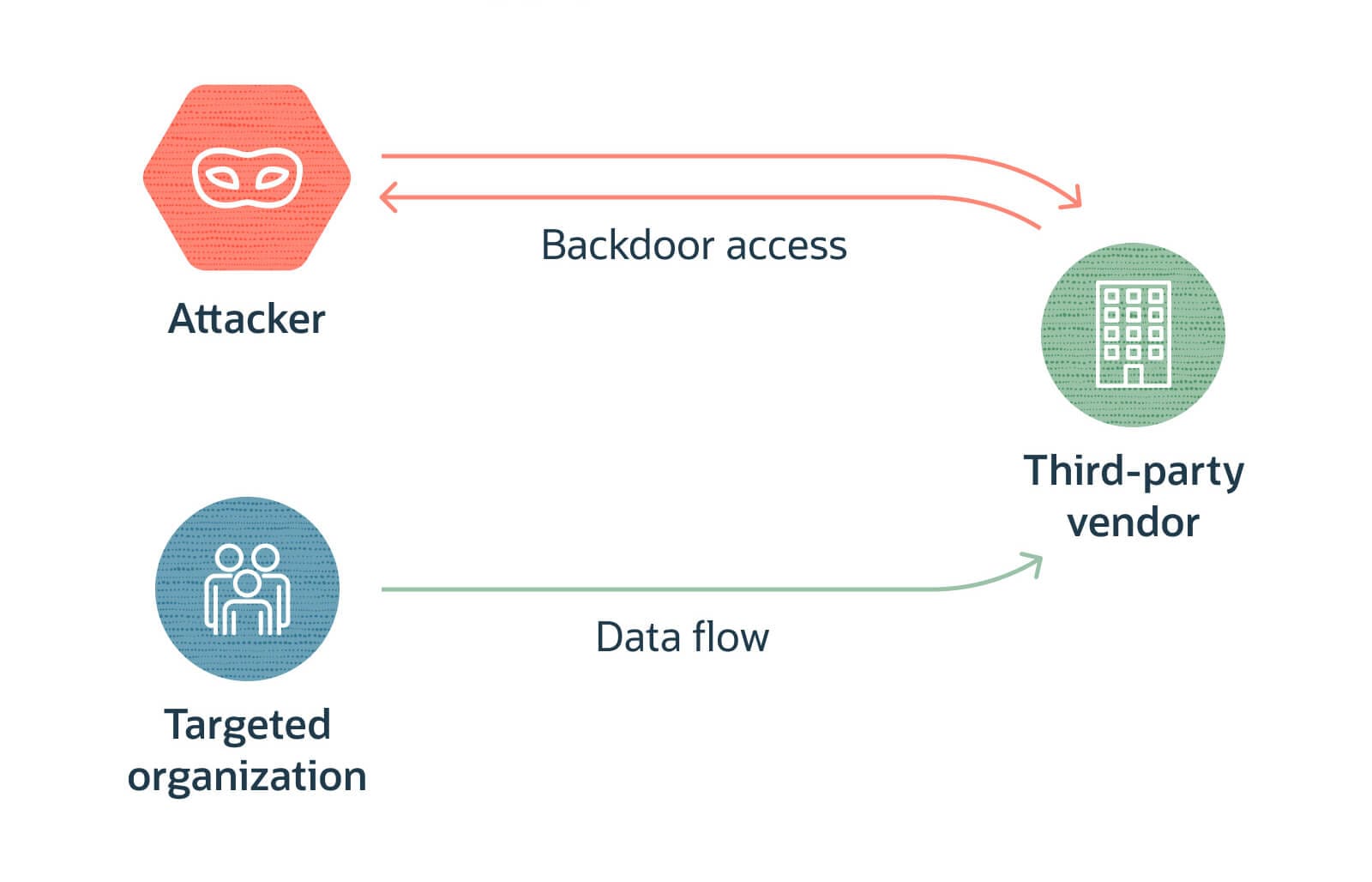
4. AI-Driven Supply Chain Attacks on SaaS Platforms
Supply chain attacks have gone AI-native in 2026, with attackers using machine learning to map vulnerabilities in interconnected SaaS platforms. By exploiting OAuth misconfigurations or API weaknesses, AI tools can automate infiltration across vendor ecosystems, leading to massive data breaches.
The SolarWinds attack of the past pales in comparison to these automated chains, with Gartner predicting a 300% increase in such incidents. Businesses must prioritize AI-driven supply chain attack defenses.
How to Defend:
- Enforce strict OAuth security with tools like Okta or Microsoft Entra ID, including regular reviews of connected apps.
- Perform enterprise AI copilot security assessments to identify weak links in your SaaS stack. Use managed detection and response (MDR) services for ongoing vigilance.
- Adopt a zero-trust model for all API calls, ensuring least-privilege access and real-time monitoring.
5. Shadow AI & Data Poisoning
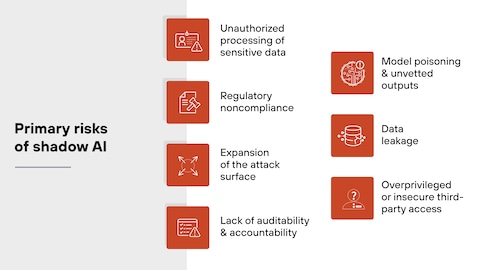
Shadow AI refers to unauthorized AI tools used by employees, creating hidden vulnerabilities. Attackers exploit this by poisoning data fed into models, leading to manipulated outputs or backdoor access. In 2026, this threat is rampant in hybrid work environments, where unvetted AI apps expose corporate data.
IBM's Cost of a Data Breach Report 2026 estimates that data poisoning incidents add an average of $1.2 million to breach costs. Defending against shadow AI requires robust governance.
How to Defend:
- Implement AI governance frameworks with tools like Symantec Data Loss Prevention or IBM Guardium to monitor and block unauthorized AI usage.
- Conduct regular AI model governance audits to detect poisoned data. Educate teams on approved AI tools and enforce policies through endpoint security.
- For comprehensive protection, integrate MDR services that scan for shadow AI activity in real time.
Conclusion: Building a Resilient Defense in the AI Era
The top 5 AI cybersecurity threats in 2026 highlight a clear shift: from human-driven attacks to machine-augmented warfare. Businesses that invest in enterprise AI security solutions, regular AI security audits, and zero-trust architectures will not only survive but thrive. At CyberDudeBivash Pvt. Ltd., our mission is to equip defenders with the tools they need – explore our open-source Top 10 Tools for free starting points, or contact us for custom cybersecurity consulting.
If you're ready to elevate your defense, reach out at iambivash@cyberdudebivash.com for Pro services or enterprise solutions. Stay vigilant – the future of cybersecurity is proactive.
For more insights, check our ThreatWire series or explore the full CyberDudeBivash ecosystem at https://cyberdudebivash.github.io/CyberDudeBivash-Ecosystem-Hub/.
#AICyberSecurity #EnterpriseAISecurity #AISecurityAudit #ZeroTrust #CyberDudeBivash #InfoSec2026